𝐖𝐞 𝐝𝐨𝐧’𝐭 𝐝𝐨 𝐁𝐮𝐬𝐢𝐧𝐞𝐬𝐬, 𝐖𝐞 𝐁𝐮𝐢𝐥𝐝 𝐑𝐞𝐥𝐚𝐭𝐢𝐨𝐧𝐬𝐡𝐢𝐩𝐬!
Tax Filing Deadlines

There are key deadlines and dates that you should know about. View below and use the chart to help you avoid missing important deadlines, view important due dates and actions for key filing deadlines.
Individual Federal Income Tax Filing

Individual Tax Deadline
Every person who earns a certain minimum amount of income must file a tax return every year.
- An individual tax return is an official form that a person or married couple submits to a federal, state, or local taxing agency. It's used to report all taxable income received during a specific period, usually the previous year. This record is used to assess the amount of tax due or overpaid for that period.
- Tax returns must be submitted by a deadline. That date is usually April 15th each year.
NOTE: If a federal tax deadline falls on a weekend or legal holiday, the due date is automatically extended to the next business day.
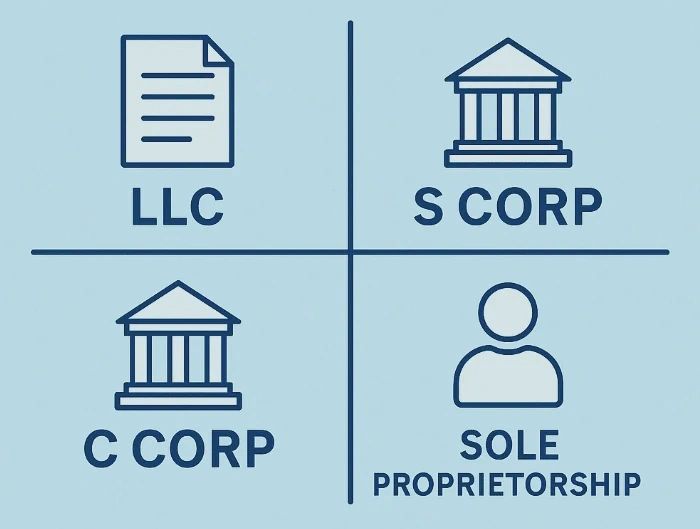
LLC & Non-Profit Tax Filing Deadlines
Federal filing deadlines for calendar-year LLCs by tax classification:
- LLC taxed as Partnership & S corporation - March 15
- Single-member LLC & C corporation - April 15
- LLC taxed as Partnership & S corporation - September 15 tax extension deadline
- Single-member LLC & C corporation - October 15 tax extension deadline
- Non-profit organizations standard tax filing deadline is 15th day of the 5th month
NOTE: If a federal tax deadline falls on a weekend or legal holiday, the due date is automatically extended to the next business day.
Key Takeaways
Business tax deadlines depend on entity type: sole proprietorship, partnership, LLC, S corporation, or C corporation. Most federal business taxes are due between March 15 and April 15, with quarterly estimated taxes throughout the year.
The IRS Form 7004 allows for filing extensions, but payments are still due by the original deadline.
Quarterly estimated taxes for self-employed individuals and corporations are due April 15, June 15, September 15, and January 15.

Spend Less Save More
𝐘𝐞𝐚𝐫 𝐑𝐨𝐮𝐧𝐝 𝐓𝐚𝐱 𝐏𝐥𝐚𝐧𝐧𝐢𝐧𝐠 𝐒𝐭𝐫𝐚𝐭𝐞𝐠𝐢𝐞𝐬
𝙻𝚎𝚝'𝚜 𝚠𝚘𝚛𝚔 𝚝𝚘𝚐𝚎𝚝𝚑𝚎𝚛
𝘋𝘰𝘯'𝘵 𝘨𝘦𝘵 𝘵𝘰𝘰 𝘤𝘢𝘶𝘨𝘩𝘵 𝘶𝘱 𝘪𝘯 𝘺𝘰𝘶𝘳 𝘤𝘶𝘳𝘳𝘦𝘯𝘵 𝘴𝘪𝘵𝘶𝘢𝘵𝘪𝘰𝘯, 𝘛𝘢𝘹𝘦𝘴 𝘤𝘢𝘯 𝘩𝘢𝘷𝘦 𝘢 𝘴𝘪𝘨𝘯𝘪𝘧𝘪𝘤𝘢𝘯𝘵 𝘭𝘰𝘯𝘨 𝘵𝘦𝘳𝘮 𝘪𝘮𝘱𝘢𝘤𝘵.
𝒫𝓁𝒶𝓃 𝒩𝑜𝓌, 𝐹𝑜𝓇 𝒶 𝒷𝑒𝓉𝓉𝑒𝓇 𝒻𝓊𝓉𝓊𝓇𝑒